Best Nepali board games I've actually played
I've been exploring Nepal's board game scene for a while. These four games stood out after many sessions with friends and family.
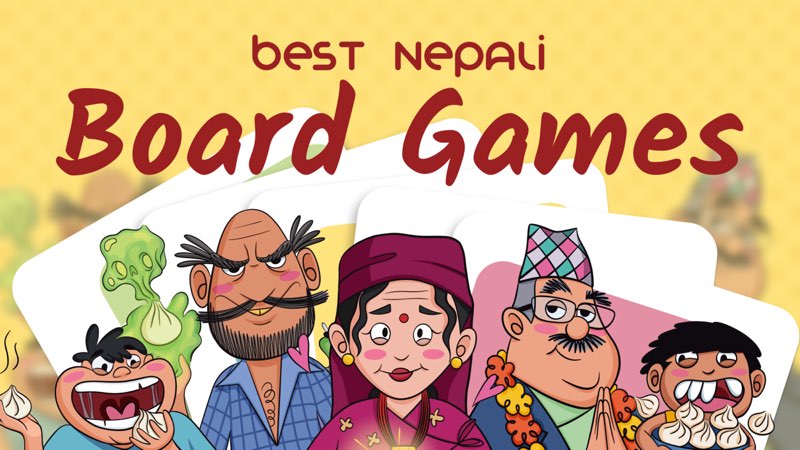
I've been exploring Nepal's board game scene for a while, and these four games stood out after many sessions with friends and family. If you want to know where to play board games in Nepal or find game nights and cafés, see our complete guide to board games in Nepal.
1. Bluff Momo
A lying game that gets better the more you lie.
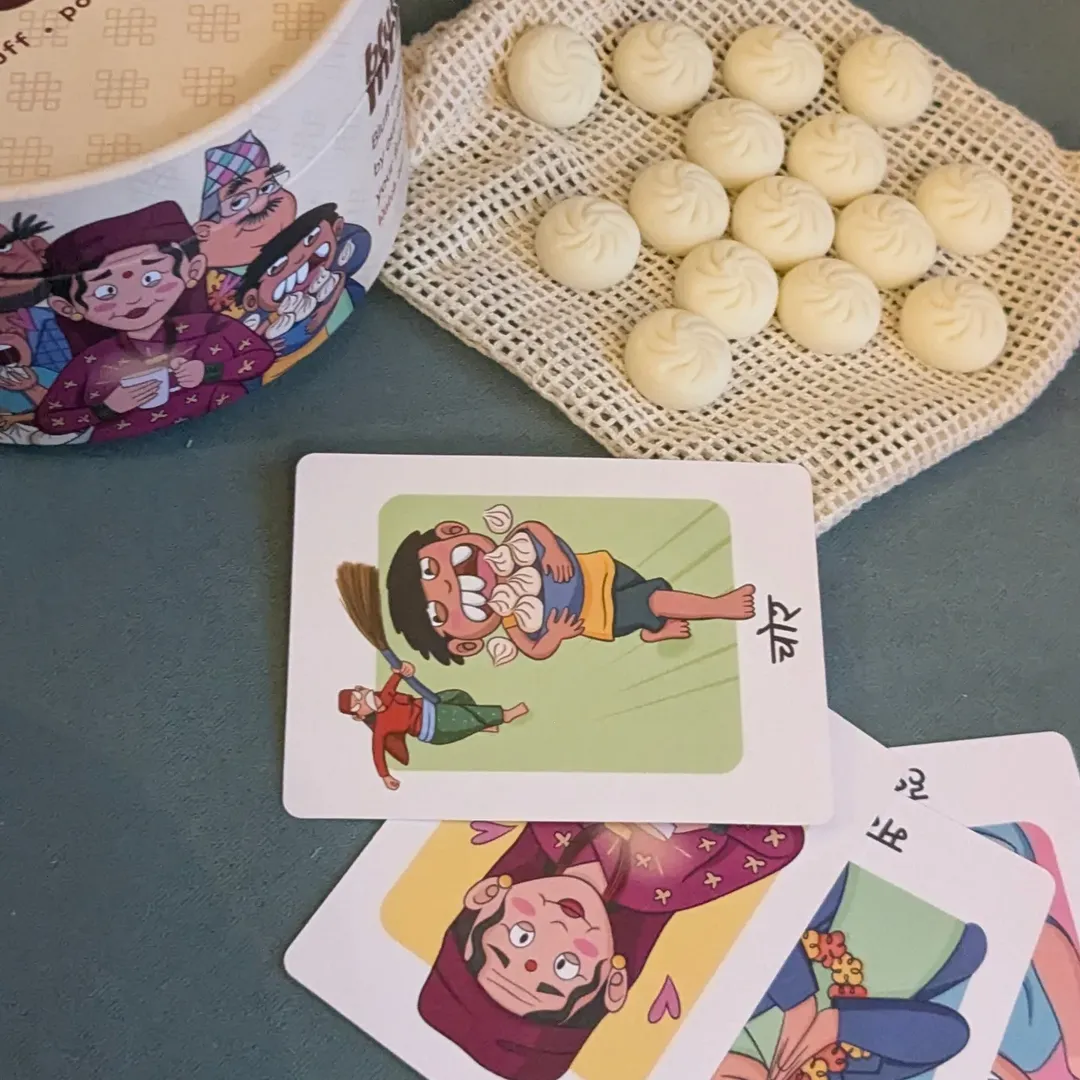
Bluff Momo is set on Kathmandu's chaotic streets, and it's about deception. You can pretend to be any character to use their power, like claiming to be the Chor to steal someone's momo. But if someone calls your bluff and you were lying, you lose cards. If you were telling the truth, they lose cards instead.
It's funny and unpredictable, with plenty of "I knew it!" moments.
Why I love it:
- The artwork and characters feel very Nepali
- It isn't luck-based
- Every game plays out differently: high replayability
- Once you learn it, it's all about reading people, not rules
What it's not great for:
- Parties: strategy and lying don't mix well with drinks
- Kids: too much to track
- First-time players: steep learning curve in the beginning
My experience:
Parents often hesitate to learn this one. Once they get it, they keep asking to play "just one more round."
(For the record, my dad loses every time. He's just too honest to survive in this game.)
Where to buy:
👉 Instagram @tumlet.boardgames
It also travels well: small enough for a suitcase and a lot more personal than a pashmina. See why it made our list of the best souvenirs to bring home from Nepal.
2. Samrajya
Simple dice game based on Nepal's unification history.

You roll the dice, move your token, and follow what the board says. Cards throw in a bit of randomness. The goal is to conquer the valley, just like Prithvi Narayan Shah did.
Why I love it:
- The artwork and characters feel very Nepali
- Teaches you a bit of history
- Easy for kids and grandparents to learn
What it's not great for:
- Strategy-heavy players
- People who hate losing to luck
- Less replayability for adults
My experience:
I've played this with 7-year-olds and grandparents, and it was really easy to introduce this to them. Nice to have if you want to bring something historical to the table. But not something I'd play every weekend.
Where to buy:
3. Baag Chal
A Nepali strategy game with no luck involved.
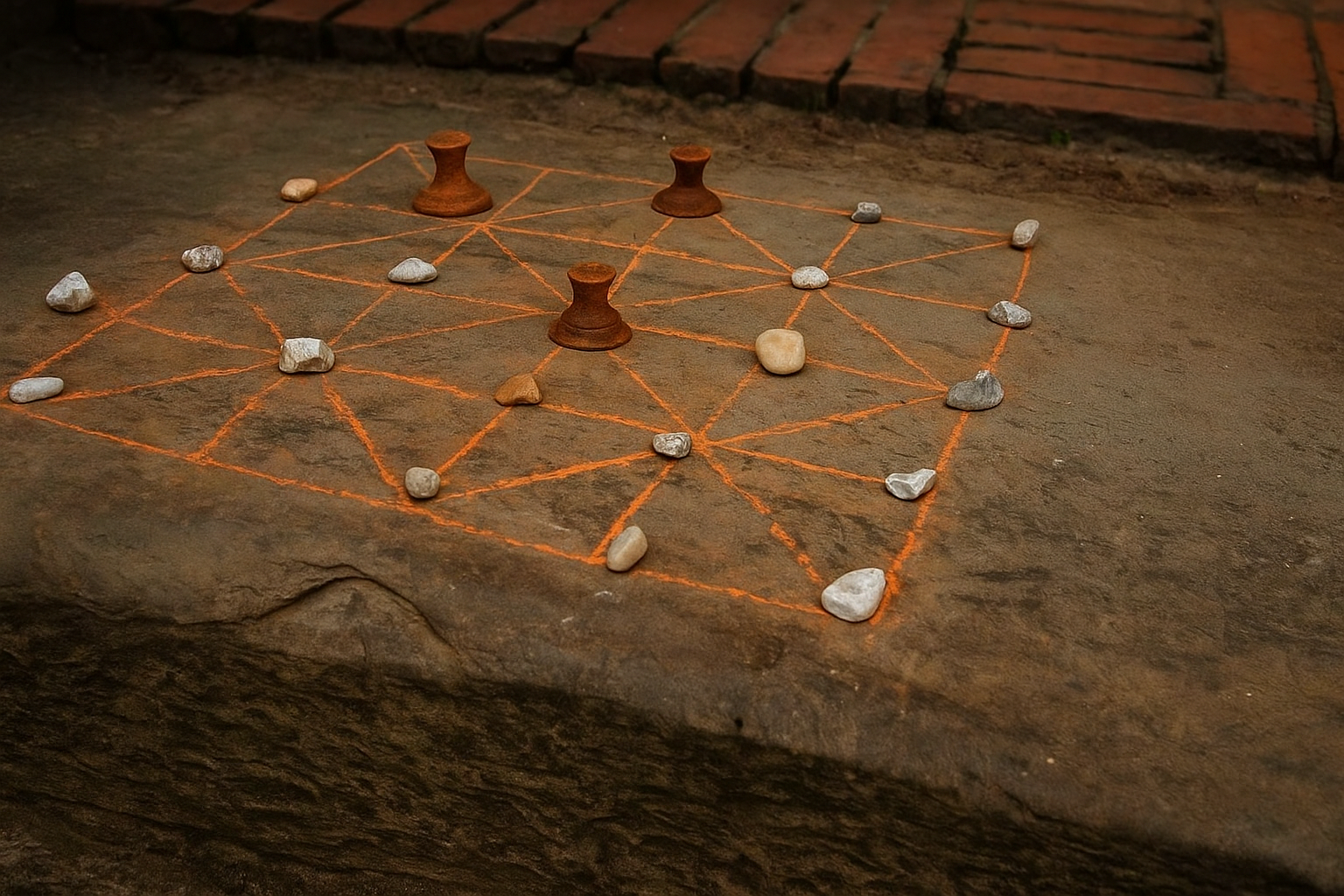
One player controls 4 tigers, the other 20 goats, on a 5x5 board. Tigers jump goats to capture them; goats try to trap the tigers.
Why I love it:
- Pure strategy: no luck involved
- Easy to learn, hard to master
- Travel-friendly: draw it in chalk and use pebbles if you need to
Baag Chal is fading from everyday play, but apps, tournaments, and wooden boards are helping keep it alive.
Where do I play:
4. Marriage card game
A fast rummy-style game that is part of Nepali culture.

Marriage (aka Nepali Taas) uses three decks, and each player gets 21 cards. The goal: build valid sets, like pure sequences, dublee (pairs), and special combos like Marriage (Tiplu, Jhiplu, Poplu). There's a joker for every round, but you only find out what it is after meeting a few conditions.
It mixes strategy, memory, and luck, and it gets chaotic when someone finishes out of nowhere.
Why I like it:
- Fast-paced but still strategic
- Easy to jump into once you've seen it played once
- Really fun with experienced players
What I dislike:
- The rules & the scoring system aren't beginner-friendly
- You need 3 decks of cards to play
- Games are usually long
Where to play:
Final picks
Here's when I reach for each one:
- Bluff Momo → My goto Nepali board game to play with friends
- Samrajya → Family time with kids
- Baag Chal → Deep strategy
- Marriage → During Dashain
Support local. The prices are fair, and playing something that reflects your own culture feels different.
Read more: Guide about board games in Nepal.